

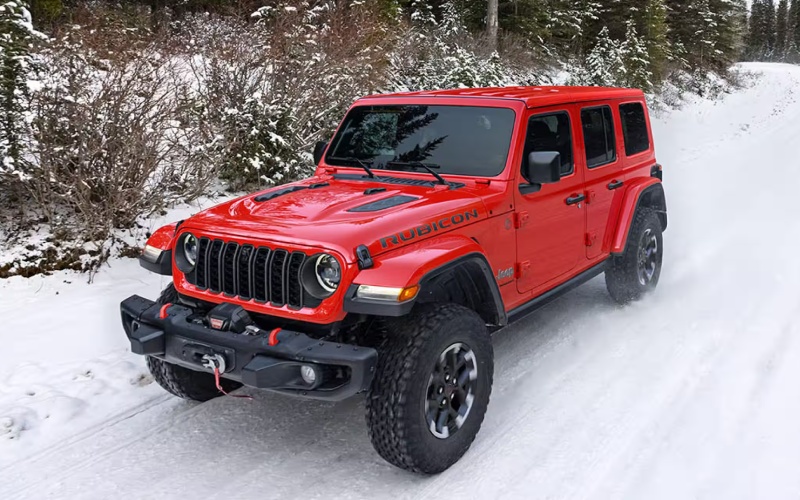
Orchard Jeep Hudson - How do you put a 2026 Jeep Wrangler in four-wheel drive near Chatham, NY?
Learning how to shift into four-wheel drive is one of the most empowering parts of owning a Jeep® Wrangler. The systems are built for confidence and control, and once you understand the basics, it becomes second nature to engage the right mode for the surface under your tires—whether you’re transitioning from dry pavement to a rutted dirt road, or easing into deep snow outside town.
This guide explains how the 2026 Wrangler’s 4x4 systems work, when to use each setting, and exactly how to shift between modes. We will also cover helpful tips for driving on mixed conditions near Chatham, NY so you can make the most of your Wrangler’s capability the moment you leave the lot.
The Wrangler 4x4 Systems at a Glance
The 2026 Jeep® Wrangler offers a choice of robust 4x4 systems designed for different use cases. Command-Trac® is a part-time system with a 2.72:1 low range, ideal when you want straightforward engagement on loose or slippery surfaces. Selec-Trac® is a full-time system that adds 4Hi Auto for set-and-forget confidence across varying conditions. Rock-Trac® is the most aggressive, available as part-time or full-time depending on the model, with a 4:1 low ratio that enables an extraordinary crawl ratio when properly equipped. All three are engineered to handle transitions from on-road to off-pavement without drama.
How to Shift: 2Hi to 4Hi (Part-Time Systems)
On Wrangler models with a part-time system like Command-Trac® or Rock-Trac® (part-time), shifting from 2Hi to 4Hi is designed to be smooth and quick:
- Slow to a safe speed: Drop your speed under 55 mph on a straight path if possible.
- Move the transfer case lever: With the vehicle rolling gently, shift from “2Hi” to “4Hi.”
- Confirm engagement: The 4WD indicator should illuminate on the cluster; steering feel and traction may change slightly.
- Use on the right surface: 4Hi in a part-time system is intended for loose, slippery surfaces like dirt, gravel, sand, or snow—not for dry pavement.
Because part-time systems mechanically lock the front and rear axles together in 4Hi, using them on dry, high-traction roads can cause driveline bind. Keep that in mind when transitioning between plowed and unplowed stretches around the village.
How to Shift: 4Hi to 4Low (Part-Time Systems)
4Low is for slow, controlled driving on very challenging surfaces—think steep grades, rock steps, or deep ruts. To engage it properly:
- Come to a crawl: Reduce to a very low rolling speed or a complete stop on a straight surface.
- Shift transmission to Neutral: This removes load from the driveline.
- Move the transfer case: Firmly shift the lever from “4Hi” into “4Low.”
- Select your gear: Place the transmission back into Drive (or your chosen manual gear) and proceed slowly.
When you are finished with the technical section, simply reverse those steps to return to 4Hi or 2Hi. Remember, 4Low is about precision, not speed—take your time and let the drivetrain work for you.
How to Use 4Hi Auto (Full-Time Systems)
If you choose Selec-Trac® or Rock-Trac® Full-Time, you will gain a handy 4Hi Auto mode for all-surface driving. In 4Hi Auto, the system actively manages torque distribution between the front and rear as conditions change. That means if you are cruising through town and then encounter a wet, leaf-covered back road, you do not need to manually switch modes. The system is designed for constant use on dry or mixed pavement, unlike part-time systems. It is a great choice for drivers who frequently encounter variable conditions or who prefer fewer manual interventions on longer drives.
When Should You Use Each Setting?
Think of the transfer case as your traction toolbox. Here is a simple way to decide quickly:
- 2Hi: Best for dry, high-traction roads and everyday commuting with maximum efficiency and normal steering feel.
- 4Hi (part-time): Use on slippery surfaces like snow, mud, gravel, or sand; avoid dry pavement to prevent driveline bind.
- 4Hi Auto (full-time): Ideal for changing or unpredictable conditions; safe for continuous use on all surfaces.
- 4Low: Choose for slow-speed control on steep grades, rocks, deep ruts, or heavy sand—precision over pace.
If you split time between Route 295 and unmaintained cut-throughs after a storm, 4Hi Auto (full-time) will simplify your life. If your weekends include trail rides, beach approaches, or seasonal roads, the part-time systems shine with their direct, locked-axle feel on the right surfaces.
Tips for Smooth Operation Around Town and Beyond
Local conditions can shift quickly, especially during shoulder seasons. Follow these practical habits to keep things smooth:
- Match the mode to the surface: If the road dries out, switch back to 2Hi on part-time systems; with full-time, keep 4Hi Auto engaged as needed.
- Shift deliberately: Use steady, confident lever movement—hesitation can make engagement less clean.
- Mind your speed: 4Low is about finesse; use it where slow and steady wins.
- Let the tires work: Proper tire pressure matters; air down only when appropriate and air back up before returning to pavement.
- Know your clearances: Wrangler has excellent approach and breakover angles—use them, but scout obstacles first.
As you gain experience, you’ll notice how predictably the drivetrain responds to different surfaces. That predictability builds confidence, which is the entire point of having a true 4x4 under you.
Technology That Enhances Confidence
The 2026 Wrangler pairs its mechanical muscle with helpful tech. Available Adaptive Cruise Control positions key sensors high near the rearview mirror rather than in the steel bumper, preserving the bumper’s trail strength and winch/clearing potential. The available Uconnect® 5 NAV 12.3-inch touchscreen gives you fast access to maps and trailheads, while Apple CarPlay® and Android Auto™ make communication and music effortless. That blend of brawn and brains lets you focus on the drive, not the setup.
If you plan to remove your doors or adjust tops often, those new quick-release door hinges make the open-air shift simple, and the range of tops—from Sunrider® Soft Top to Freedom Top® and the SKY ONE-TOUCH® POWER TOP—lets you fine-tune your setup for the day’s plan in minutes.
Try It With a Guided Test
The best way to learn is hands-on. Ask for a route that includes stop-and-go, a short highway stretch, and a safe surface where you can feel the difference between 2Hi and 4Hi (or 4Hi Auto). A quick practical demo is worth pages of explanation—once you feel the system engage and the traction settle in, you will understand why Wrangler stands apart.
If you are just starting your search, Orchard Chrysler Dodge Jeep Ram Hudson can walk you through each 4x4 system, suggest the right fit for your driving, and tailor a test drive to your priorities—serving Catskill, Chatham, and Pittsfield with the kind of local, practical guidance that keeps shopping simple and useful.
Frequently Asked Questions:
Can I shift into 4Hi while moving?
Yes. On part-time systems, you can shift from 2Hi to 4Hi under 55 mph on suitable surfaces. On full-time systems, 4Hi Auto can remain engaged continuously.
When should I use 4Low?
Use 4Low for slow, controlled driving over steep, technical, or deeply rutted terrain. Shift to neutral, then select 4Low, and proceed gently.
Is 4Hi Auto safe on dry pavement?
Yes. Full-time systems with 4Hi Auto are designed for constant use on all surfaces. Part-time 4Hi is not recommended on dry pavement.
Which system is best for mixed weather driving?
Selec-Trac® or Rock-Trac® Full-Time offers 4Hi Auto for changing conditions, ideal if your daily routes swing between dry, wet, and light snow.
With a little practice, you’ll be shifting confidently and using each setting to your advantage. That’s where the Wrangler shines—clear, capable systems that make your drive better wherever you point the hood.
Request more 2026 Jeep Wrangler information
Categories:
Jeep Wrangler